Buyer pain point
What electronics buyers usually get wrong
Electronics is the category where the product price stops being the main cost. A buyer who only confirmed model number and price often discovers, after the warehouse receives the parcel, that the device runs on 220 V only, the plug is Type-A, the charging cable is missing, or the lithium battery means the order cannot ship on the cheapest line. The other common mistake is treating "global version" or "international" claims as warranty assurance — most rep electronics ship with no functional manufacturer warranty outside China, and returns mean shipping the device back at your cost. The fix is to confirm voltage, plug, included accessories, battery capacity, and supported shipping lines before paying.
QC checklist
What to inspect in electronics warehouse photos
- Model number on the device sticker and the box label, matched against the listing title.
- Plug type, voltage range, and any "international" labelling on the adapter.
- Charging port (USB-A, USB-C, Lightning, proprietary) plus cable colour and braiding.
- Included accessories: manual, warranty card, extra tips, charging block, sleeve, dust cap.
- Power-on photo when possible — the warehouse can usually run a 30-second functional test.
- Battery capacity rating on the device or box (mAh / Wh) to confirm shipping compliance.
- Serial number sticker close-up for traceability if you ever need to claim a defect.
Compatibility
Voltage, plug, and region checks
Most Chinese-domestic electronics ship 220 V / 50 Hz with a Type-A two-pin plug. Devices marked "100-240 V" are dual-voltage and only need a plug adapter abroad; devices marked "220 V only" need a step-down transformer in 110 V regions like the US, Canada, and parts of Japan. Bluetooth and Wi-Fi frequencies sometimes differ — Chinese-domestic Wi-Fi may not advertise the same 5 GHz channels as US firmware, and unlocked phones may not support all LTE bands abroad. For audio gear, check whether the listing offers an "international" or "global" firmware version with English menus, and confirm the seller will pre-flash if needed.
Seller checks
How to verify an electronics seller is safe
Electronics sellers are the category with the highest mid-batch silent substitution risk — refurbished units sold as new, missing accessories quietly removed from the package, and serial numbers that turn out to be cloned. Confirm the seller has uploaded recent buyer reviews showing the device boxed and powered on. Ask the seller through Fishgoo support whether the device has been opened or tested, and how they handle DOA (dead-on-arrival) cases. Look for community feedback on "matching serial" complaints — a serious seller maintains traceable serials and will refund DOA devices without arguing.
Shipping
How electronics change your parcel route
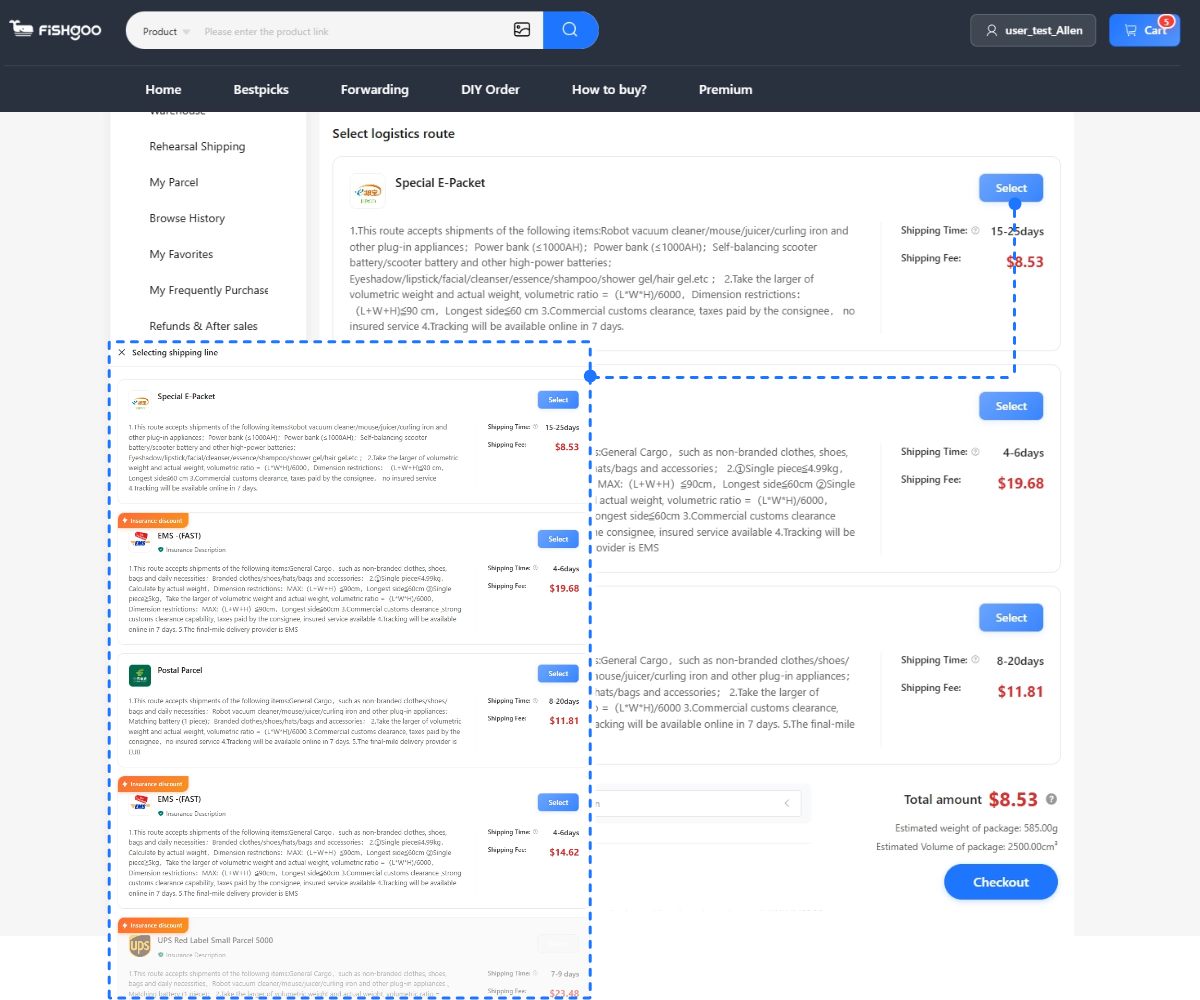
Lithium batteries split shipping into two universes: small batteries under 100 Wh can usually ride sensitive-item lines (which cost 30-60% more than standard), and larger batteries are often refused outright by air freight. Magnets in headphones, smartwatches, and AirTags also trigger sensitive-route surcharges on certain lines. Confirm the warehouse can ship via your preferred route before paying — a $30 saving on the device can become a $50 sensitive-line surcharge if you only check after warehouse arrival. For multi-device hauls, group sensitive items together in one parcel so the surcharge applies once, not per device.
FAQ
Electronics spreadsheet questions buyers ask first
Can I ship a phone with battery on the cheap line? Usually no. Phones with built-in lithium batteries require sensitive-item lines that cost more but are tested for compliance.
Is the warranty real? For Chinese-domestic rep electronics, treat the manufacturer warranty as void abroad. Seller-side return policies vary; confirm in writing through Fishgoo support before paying.
Will the device work in 110 V regions? Only if the label reads 100-240 V. Single-voltage devices need a step-down transformer, and many small appliances are 220 V only.